

Best Windows for Utah’s Climate: Year-Round Comfort & Energy Savings
Updated: November 10, 2026

The best windows for a Utah home depend on its climate, sun exposure and the rooms you want to make more comfortable. Start with the whole-window U-factor and solar heat gain coefficient (SHGC), then compare the exact product and installation scope. Pane count and frame material are parts of that decision, rather than a substitute for the ratings. This guide explains how to compare your options for cold winters, sunny rooms and year-round use.
Key Takeaways
- Compare the exact window’s whole-product ratings before choosing a glass package.
- A lower U-factor means less heat transfer through the window.
- A lower SHGC limits solar heat gain; consider the direction the window faces and existing shade.
- Check ENERGY STAR certification for the home’s county and the specific product configuration.
- Check each utility’s current eligibility rules before including a rebate in your budget.
Why Utah’s Climate Demands Specialized Windows
Utah homes face different combinations of winter cold, summer heat and sun exposure. A room that loses warmth on a winter evening may need a different glass-and-shade discussion from one that overheats in afternoon sun. Start with the conditions in your home and the ratings of the window you are considering.
A draft or uncomfortable room deserves an assessment of the glass, operating parts, frame and installation. Pane count alone does not establish why a window is uncomfortable or whether it needs replacement. Review the signs you may need a window replacement alongside an inspection of your existing windows.
- Compare the rooms that feel cold in winter and those that overheat in summer.
- Note which windows face strong sun, receive shade or need to open for ventilation.
- Tell your installer the home’s location and elevation so any product-specific requirements can be checked.
Regional Considerations for Utah Homes

Use these regional examples to organize your questions, then check the ENERGY STAR climate zone for your home’s county. Product certification, building requirements and utility rebate eligibility are separate checks.
| Home and exposure | Compare first | Before choosing |
|---|---|---|
| Wasatch Front home with cold winters and sunny summer rooms | Whole-window U-factor, SHGC and room exposure | Compare the proposed glass package for each exposure and check county-specific certification. |
| Mountain home where winter comfort is the main concern | U-factor and the installation’s air-sealing details | Compare exact double- and triple-pane configurations; ask the manufacturer about any elevation-specific requirements. |
| Home or room with strong afternoon sun | SHGC, shading and daylight needs | Balance solar heat control with the room’s light and view; verify the home’s county rather than assigning a zone from a city label. |
Mixed Climate Areas (Wasatch Front: Salt Lake City, Provo, Ogden)
Compare winter heat loss with summer solar heat gain. Review the whole-window U-factor and SHGC for each proposed configuration, taking the room’s direction and existing shade into account. Confirm the exact product’s certification for the home’s county.
Colder Mountain Regions (Park City, Logan)
Where winter comfort is the main concern, compare whole-window U-factors and how the installation will be air sealed. Ask for like-for-like double- and triple-pane options and any manufacturer requirements for the installation elevation.
Hot Desert Climates (St. George, Moab)
For a room with strong sun, compare SHGC, shading and daylight needs together. A lower SHGC limits solar heat entering through the window. Confirm county-specific certification rather than assigning an official zone from a broad regional label.
Best Window Materials for Utah Climate
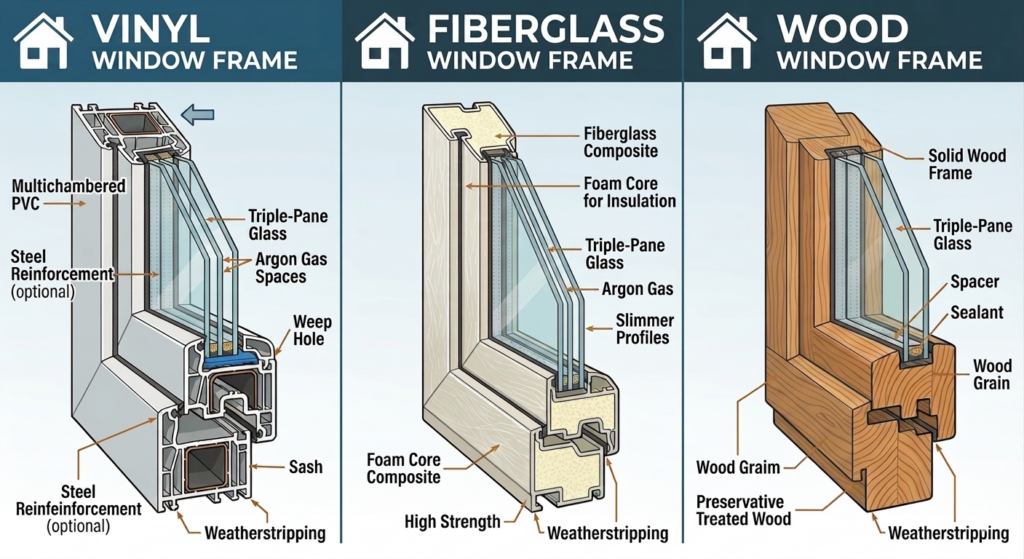
Vinyl, fiberglass and wood can each be part of an energy-efficient window. Compare the exact product’s ratings, appearance, care requirements and installed quote before choosing a frame material.
| Frame material | What to compare | Care and appearance |
|---|---|---|
| Vinyl | Whole-window ratings, reinforcement and the offered glass package | Typically low maintenance; compare finish and color choices. |
| Fiberglass | Whole-window ratings, frame construction and available configurations | Typically low maintenance; confirm the finish’s care instructions. |
| Wood | Whole-window ratings and any exterior cladding | Compare the desired traditional appearance with finish and maintenance needs. |
Use ENERGY STAR’s material and certification guidance as a starting point. Installation details, flashing, air sealing and the written warranty need review for every material. A material name alone does not establish the best value or long-term performance for your home.
Best Window Types for Utah’s Weather
Compare double- and triple-pane options using the ratings for the exact style, size and glass package in your quote. Consider how much better each option addresses your room’s needs and what the installed-price difference includes. Ask for those specifications in writing so you can compare the options on the same basis. See our double-pane versus triple-pane window comparison for the questions to ask when comparing quotes.
Triple-Pane Windows: Comparing Winter and Summer Performance
- Compare the proposed whole-window U-factor to understand heat transfer.
- Compare SHGC and room exposure to discuss unwanted solar heat.
- If outside noise is a concern, ask for the exact product’s acoustic test information rather than assuming an extra pane guarantees a particular result.
ENERGY STAR® 7.0: What It Means for Utah Homeowners
- Look for certification for the home’s official climate zone.
- Confirm the exact window style and glass configuration in the quote; certification is not a blanket claim about every product in a series.
- Check utility requirements separately before including a rebate in the budget.
Explore EHI’s window styles and options and ask your Energy Guide for the specifications of the configuration being proposed.
Which Window Style Works Best in Utah Homes?
Start with how you want the window to open, the available space and the room’s ventilation and cleaning needs. Then compare the ratings of the exact products.
| Window style | How it works | Question to ask |
|---|---|---|
| Casement | Hinged sash opens outward. | Is there clearance outside, and can you reach the operating handle? |
| Double-hung | Sashes move vertically. | Which sashes open or tilt for cleaning on this model? |
| Sliding | One or more panels slide sideways. | How much of the opening provides ventilation? |
| Picture / fixed | Does not open. | How will the room’s ventilation needs be met? |
| Awning | Top-hinged sash opens outward. | Does the opening suit the available clearance and operating needs? |
Essential Efficiency Features for Utah Homes
Use the NFRC window ratings to compare products. Ask for the whole-window figures, not only a glass-only value.
- U-factor: A lower number means less heat transfer through the rated window.
- SHGC: A lower number admits less solar heat; consider sun direction and shade.
- Visible transmittance: Compare daylight alongside heat-control choices.
- Air leakage: Ask for the exact product’s tested information and how the installed opening will be sealed.
- Low-E coatings and gas fills: Compare their effect through the exact configuration’s ratings, rather than relying on feature names alone.
- Frames and spacers: Review the complete assembly, care instructions and warranty with the proposed glass package.
Utah Utility Rebates: What You Can Qualify For
Before ordering, check the current rules for your electric and gas utilities. Enbridge Gas’s 2026 Utah ThermWise single-family window program requires a U-factor of 0.22 or lower, plus account, heating and documentation requirements. Rocky Mountain Power’s Wattsmart program has separate terms to verify. Certification alone does not establish eligibility for every rebate.
Energy Home Improvements is a Rocky Mountain Power Energy Efficiency Partner—High Efficiency Contractor and an Enbridge Gas Energy Efficiency Program Partner. See EHI’s utility partner recognition. Ask your Energy Guide which current rebate requirements apply to your home and the windows you’re considering.
Rocky Mountain Power Wattsmart Program
Check the current Utah Wattsmart window requirements, customer eligibility, installation dates and submission deadline before ordering. Keep the supporting product information and confirm any rebate assumption used in your quote.
Enbridge Gas ThermWise® Weatherization Program
For the current Utah single-family window application, confirm the home’s active account and qualifying gas-heating requirements. Keep the itemized invoice, window dimensions and NFRC documentation, and check the application deadline. Ask EHI which parts of the application process are included in your project.
For more program context and current official links, see our Utah window rebate guide. Partner status does not guarantee rebate approval.
What Does Window Replacement Cost in Utah?
Your installed price depends on the window sizes, operating styles, frame and glass choices, access, and work needed around each opening. Ask for an itemized quote showing removal, installation, finishing and any repairs that are included or excluded.
When comparing double and triple pane, request the exact ratings and installed-price difference for otherwise comparable configurations. Compare your room needs and the written scope rather than assuming a fixed payback.
For planning questions, see our window replacement cost guide. Review current EHI financing options and terms with your Energy Guide before making a financing decision.
Advanced Features to Look For in Utah Windows
Choose optional features for a specific need and confirm their availability on the model you are considering.
- Cleaning access: Ask whether the selected sash tilts or can be removed for cleaning.
- Frame finishes: Review the manufacturer’s finish, exposure and care guidance.
- Frame and glass options: Compare the ratings of the final configuration.
- Grids and hardware: Compare appearance and everyday operation, and confirm the specifications of the complete product.
Window Maintenance Tips for Utah’s Climate
Follow the care instructions for the exact window and finish installed in your home. Keep tracks and drainage paths clear and check operating parts and weatherstripping as the manufacturer recommends.

Cold Regions (Northern Utah, Mountain Communities)
- Inspect weatherstripping and operation before winter.
- Keep drainage paths clear according to the care guide.
- Have moisture between panes assessed; room-side condensation also calls for a humidity and ventilation check.

Desert Regions (Southern Utah)
- Inspect seals and finishes as the manufacturer recommends.
- Use only the approved cleaning method for your glass, coating and frame finish.

Mixed Climates (Wasatch Front)
- Clean tracks and accessible surfaces according to the care guide.
- Maintain hardware only with manufacturer-approved products and methods.
How to Plan Your Window Replacement in Utah
Discuss these decisions before comparing final quotes.
- Full-frame or insert replacement: Ask whether the existing frame and surrounding opening are sound, and what removal, flashing and finishing the quote includes.
- Scheduling: Ask how the crew will protect your home and follow product and sealant installation conditions.
- Installer selection: Ask about relevant training, local project experience, installation methods and written coverage.
Choosing the Right Window Company in Utah
A useful proposal connects the product specifications to the work needed at your opening. Ask these questions:
- What exact model, operating style, size and glass package is included?
- How will the opening be inspected, flashed and air sealed?
- What do the product and installation warranties cover, and who handles a claim?
- Which utility requirements apply, and what documents will I need?
Review EHI’s documented window projects for examples of scope and product choices. Compare the written details of your own project before deciding.
FAQs – Quick Answers for Utah Homeowners
What are the most energy-efficient windows in Utah?
Compare the exact window’s whole-product ratings and climate-zone certification, then consider the room’s sun exposure and installation needs. A frame material or pane count alone does not establish the most efficient choice. Our double-versus-triple-pane guide explains how to compare configurations.
What U-factor should I look for in Utah?
Compare a low whole-window U-factor, then check the exact product against your home’s official ENERGY STAR county zone and any applicable utility requirements. General regional guidance is not a substitute for certification or rebate eligibility.
What SHGC rating is best for southern Utah?
A lower SHGC limits solar heat gain, which matters for hot, sunny rooms. Choose it alongside the room’s orientation, shade and daylight needs, then verify the exact product’s certification for the home’s county.
Does Utah’s high altitude affect window performance?
Tell the installer the home’s location and elevation and ask the manufacturer about requirements for the exact window and glass package. Avoid choosing from a fixed statewide UV percentage or an assumption that all double-pane windows fail at elevation.
Are triple-pane windows worth the cost in Utah?
Compare the exact double- and triple-pane configurations, whole-window ratings, installation scope and installed-price difference. Choose according to the room’s needs and your budget; an extra pane alone does not establish a particular savings or payback.
How do I qualify for Utah utility rebates on replacement windows?
Check current Rocky Mountain Power Wattsmart and Enbridge Gas ThermWise terms before ordering. Enbridge’s 2026 Utah single-family window program requires U-factor 0.22 or lower plus account, heating and documentation conditions. Each program has its own rules and deadline; ENERGY STAR certification and contractor partner status do not automatically establish eligibility.
What is the best window frame material for Utah?
Compare the exact product’s ratings, appearance, care requirements and installed quote. Vinyl, fiberglass and wood each have different characteristics; the right choice also depends on the opening, finish and maintenance you want.
How much does window replacement cost in Utah?
An itemized installed quote is needed for your home. Window size, operating style, glass package, access, opening repairs and finishing affect the scope. Use our window replacement cost guide to prepare questions, then compare written proposals.
Why Energy Home Improvements Is Utah’s Window Replacement Specialist
Bring your room-comfort concerns and project goals to an EHI consultation. Compare available window styles and options with the specifications, installation details and written coverage proposed for your home.
- Review the final window sizes, styles, glass, grids and colors.
- Confirm the installation scope and the written window warranty coverage.
- Confirm which rebate requirements and application steps apply to the project.
Ready to compare the options for your home? Start your free window estimate and discuss the project with an Energy Guide.
