Window Replacement: Costs, Benefits, Types, and What to Expect
Updated November 13, 2026
A sound, square window frame may be able to take an insert. If the frame is damaged or you’re changing the size of the opening, full-frame replacement lets the installer remove the old frame and inspect the surrounding wall. For a standard window, use $800–$2,000 installed as a planning range, with larger or custom units priced separately.
When we removed the windows from a 1970s ranch in Taylorsville, Utah last year, the crew documented what they found in every rough opening before setting the new units: air gaps around the frame on five windows, failed seals on three, visible condensation staining on two sills, and one section of soft framing at the north-facing bedroom window that had been absorbing moisture long enough that the wood compressed under a thumbnail. The homeowner had no idea any of that was there. From inside, those windows just looked old.
The Taylorsville job shows why the condition of the opening matters.
This guide covers what the work actually involves, what affects cost, and what most companies — and most online guides — do not tell you.
Key Takeaways:
- Check your utility’s current eligibility rules before counting a rebate in your budget.
- Most homeowners should replace when windows show fog between panes, noticeable drafts, or frame damage
- Ask the installer how they’ll inspect the sill and document any moisture damage before pricing repairs.
- Window performance degrades gradually over 15-20 years through mechanisms that are invisible until they are not
What Is Window Replacement?
Window replacement means removing what is in the opening and putting in something built to current performance standards. The discovery happens in between those two steps — when the old window is out and the rough opening is exposed.
In most of the homes we work in across Utah, Idaho, Indiana, and Sacramento, that opening tells a story the homeowner could not have known from inside the house: compressed foam, failed moisture barriers, framing that moved as the house settled, previous installs where the shim pack was driven from one side and the window sat twisted for a decade.
For most homes, the choice is between an insert replacement (new window set inside the existing frame) or a full-frame replacement (removing everything down to the rough opening in the wall framing).
Insert vs. Full-Frame Replacement: Which Do You Need?
Insert replacement sets a new window unit inside your existing frame. It is faster, less invasive, and less expensive. It is the right choice when the existing frame is structurally sound, dimensionally square, and free of rot or moisture damage.
Full-frame replacement removes the window, frame, interior and exterior trim, and in some cases surrounding casing down to the rough opening. It costs more. It is required when the frame is compromised, when the opening is out of square, or when you want to change the window size.
We recommend full-frame in roughly 35-40% of the homes we quote. The reason most companies default to inserts without saying so: inserts are cheaper and easier to sell. But an insert set into a rotted frame or a compressed sill hides the problem rather than solving it.
Signs you likely need full-frame replacement:
- Frame feels soft or shows visible moisture damage
- Paint is peeling on the interior sill or surrounding wall
- Your home is 1950s-1970s construction with original wood frames
- You want to change the dimensions of the window opening
When in doubt, ask any company you quote to assess the frame condition before recommending an installation type. How they answer tells you whether they are looking at the job or looking for the path of least resistance.
When Should You Replace Your Windows?
Replace your windows when they show physical signs of seal failure, structural damage, or hardware failure — not when they simply look old.
Most homeowners wait too long. They assume drafty windows and rising bills are just part of living in an older home. In our experience, persistent problems signal window failure, not normal aging.
What We Look For When We Assess Existing Windows
Every EHI assessment covers the same checklist before recommending replacement. These are the specific findings that move a window from “aging” to “failed”:
- Failed seal. Condensation or fog between the glass panes means the insulating gas has escaped. The thermal performance of that unit is gone. A failed seal cannot be repaired — the insulated glass unit must be replaced.
- Air gap at the frame perimeter. Run your hand around the interior frame edge in winter. A draft you can feel is a gap you can measure. In the Taylorsville assessment, five of thirteen windows had detectable air movement at the frame.
- Soft framing. Press a thumbnail into the wood sill or the frame surround at the corners. If it compresses, moisture has been present long enough to compromise the wood. This is a full-frame job.
- Operational failure. Windows that bind, will not lock, or will not stay open are a security and safety issue. Lock hardware fails before the glass does on most residential windows.
- Condensation staining on the interior sill. Even without active moisture, old staining at the sill indicates where water has tracked and dried repeatedly. The wood underneath may be compromised even when it looks dry.
- Audible street noise through closed windows. Single-pane windows transmit noise. Double-pane windows with compromised seals transmit almost as much. If you can hear a conversation on the sidewalk through your closed windows, the seal has failed or was never adequate.
When multiple findings appear together, replacement is almost always more cost-effective than individual repairs. A failed seal cannot be fixed. A compromised frame does not improve on its own.
Is Window Replacement Worth It?
Window replacement is worth it when your windows have physically failed, create daily comfort problems, or are single-pane. For homes with functioning double-pane windows under 15-20 years old, the financial return on replacement alone is modest.
Here is our honest perspective: the homeowners most satisfied with their investment replaced windows that were genuinely failing. Foggy glass, constant drafts, rotted frames, locks that do not work. Replacing those brings immediate, noticeable improvement.
Homeowners who replaced functioning windows primarily for energy savings sometimes find the results underwhelming. Energy savings are real but gradual. If your windows are working, the stronger case for replacement is comfort and noise reduction.
When replacement makes the most sense:
- Windows are single-pane (comfort and efficiency improvement is immediate and significant)
- Seals have failed and glass is fogged
- Frames are rotted or damaged
- You are preparing the home for sale
When to wait or get a second opinion:
You are expecting a specific dollar amount in annual energy savings
Windows are functioning double-pane under 15-20 years old
Budget is tight and windows are not causing active problems
What Are the Benefits of Window Replacement?
Window replacement delivers immediate, noticeable improvements in comfort and noise reduction. Energy savings are real but gradual, and depend on what you are replacing and how well the installation seals the rough opening.
Sam Johansen in Idaho replaced his windows with EHI and told us afterward: “We immediately felt a difference in the daytime temperatures and noise from outside was significantly muted.” Crystal Lynn in Utah said her triple-pane windows “helped quiet a lot of the noise from outside and reduced the dust in the air inside.”
Both of them noticed results the same day the crew left. Not at the next utility bill. That day. Browse window projects we have completed across Utah and Idaho to see the work in real homes.
The benefits are real. They are also unevenly distributed depending on what you are replacing, what you are replacing it with, and how well the installation was done.
Energy Efficiency: What the Data Actually Shows
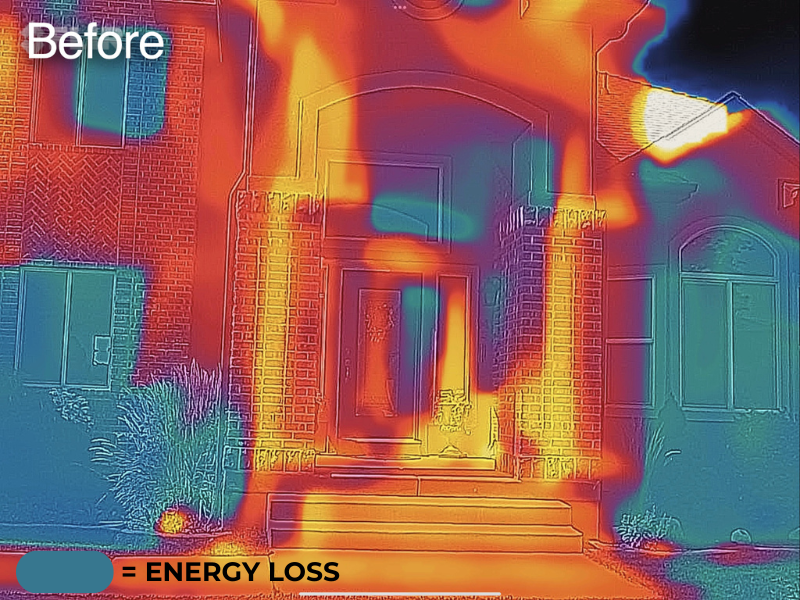
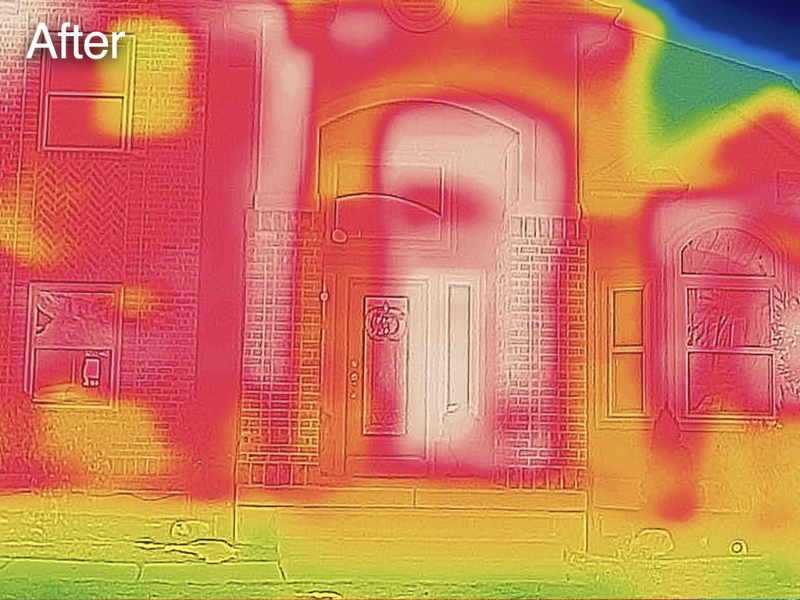
A homeowner in Pleasant Grove, Utah replaced 15 windows with triple-pane TG2 units at a U-factor of 0.21. The project qualified for $1,697.90 in combined utility rebates: a $771.77 Enbridge ThermWise rebate and a $926.13 Rocky Mountain Power Wattsmart rebate. Estimated monthly savings on heating and cooling: $31 — roughly $372 annually.
That is a real number from a real job in our service area, not a range from a national study. The savings depend on what you are replacing and your climate.
Single-pane to triple-pane delivers the most dramatic improvement. Functioning double-pane to newer double-pane delivers modest improvement.
Comfort and Noise
Triple-pane glass at a U-factor of 0.21 or lower reduces cold glass surface effect, which is what makes sitting near a window in January feel cold even when there is no draft. It also reduces outdoor noise substantially. Both effects are immediate after installation.
If noise reduction is your primary reason for replacing, ask specifically about laminated glass options — they are designed for acoustic performance beyond what standard multi-pane units deliver.
What Types of Replacement Windows Are Available?
Six primary window styles are available for residential replacement. Each serves a different balance of ventilation, sealing performance, and maintenance requirements. You can browse our full window selection to compare available styles, colors, hardware, and glass packages.
| Window Style | Best For | Ventilation | Maintenance |
| Double-hung | Most homes; versatile openings | Both sashes open | Tilts in; easy |
| Casement | Maximum airflow; tight seal when closed | Full opening | Moderate; crank mechanism |
| Sliding | Wide, horizontal openings | Half-width | Easy; no moving parts |
| Picture (fixed) | Views and natural light | None | Minimal |
| Bay/bow | Curb appeal; added interior depth | Varies | Higher; structural requirements |
| Awning | Ventilation in rain | Top-hinged out | Moderate |
Double-hung windows are what we install in roughly 70% of residential jobs. Not because they are always the best performing window, but because they are the most forgiving. A double-hung in a rough opening that is slightly out of square is adjustable.
A casement in the same situation binds — and binding is how crank mechanisms fail by year four.
Casement windows seal tighter when closed than double-hung windows and are excellent where maximum ventilation matters. The tradeoff is the crank mechanism, which requires more maintenance than a double-hung over decades of use.
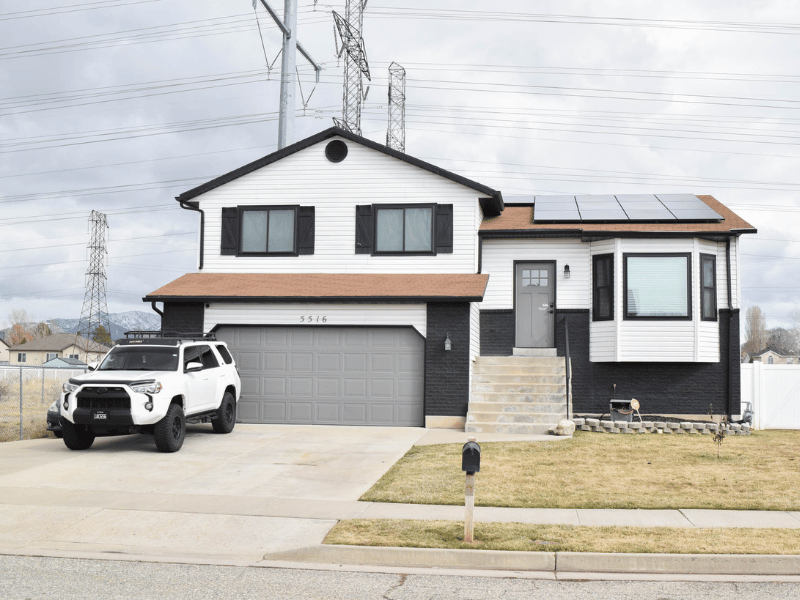
Bay and bow windows extend outward from the home and require structural support assessment before we recommend them. We always evaluate framing and roofline on those jobs before quoting.
What Materials Are Best for Replacement Windows?
Vinyl is the right choice for most homes. Fiberglass is worth the cost premium in cold climates or on large windows. Wood is only practical for historic homes where matching original architecture matters.
| Material | Installed Cost (est.) | Maintenance | Thermal Performance | Best Fit |
| Vinyl | $800-$1,500 | None | Excellent | Most homes |
| Fiberglass | $1,200-$2,200 | None | Superior | Cold climates; large windows |
| Composite | $1,000-$2,000 | Minimal | Very good | Budget fiberglass alternative |
| Wood | $1,500-$3,500 | Regular | Good | Historic homes |
Vinyl is what we install in the large majority of homes, and we are honest about why: it performs well for the climate zones we work in, requires zero maintenance, and costs significantly less than fiberglass or wood. One thing most companies skip: darker vinyl frame colors expand and contract more than lighter colors in hot climates.
In Sacramento, where summer temperatures regularly exceed 100 degrees, we typically steer customers toward lighter frame colors or suggest fiberglass for large south-facing windows. It is a detail that matters over a 25-30 year lifespan.
Fiberglass offers three advantages over vinyl:
- Dimensionally stable in extreme temperature swings
- Better insulation value
- Paintable if your aesthetic needs change
We recommend it for customers in cold climates and for large picture or bay windows. The cost premium is 30-50% over comparable vinyl.
For most modern homes, wood is not the practical choice. For a 1920s craftsman bungalow where matching existing architecture matters, it often is.
How Much Does Window Replacement Cost?
In our service area, a full-home window replacement project typically runs $15,000 to $40,000, depending on home size, window count, glass package, and installation type. Per-window installed cost ranges from $800 on a standard vinyl double-hung to $2,000+ on a large triple-pane casement or specialty shape. For a complete cost breakdown by window count and home size, see our window replacement cost guide.
Those ranges match national industry figures because our material and labor costs are not dramatically different from other professional window companies. What differs is what those numbers actually buy — and that comes down to what happens to the rough opening during installation.
Cost by Window Type
| Window Style | Installed Cost Range |
| Double-hung (vinyl, standard) | $800-$1,500 |
| Casement (vinyl) | $900-$1,800 |
| Sliding (vinyl) | $850-$1,500 |
| Picture (fixed) | $700-$1,400 |
| Bay or bow | $2,500-$6,000+ |
| Triple-pane upgrade | Add $150-$350 per window |
What Drives the Variation Within Those Ranges
Two quotes for the same window in the same opening can be $400 apart. It is almost never the glass.
Get the product specifications in writing from every company you quote and compare them line by line — the glass spec is almost always the same. The difference is in what each company does to the rough opening between removal and installation. Indiana homeowners can also use our guide to compare window companies in Indiana before deciding.
Main cost variables:
- Window size and style. Bay and bow windows require structural work standard windows do not.
- Frame material. Vinyl is most affordable; fiberglass and composite cost more; wood costs the most.
- Glass package. Triple-pane and Low-E coatings add real performance in the right climate.
- Insert vs. full-frame. Full-frame adds $150-$400 per window in labor and materials.
- Framing issues discovered on removal. Rot, moisture damage, and out-of-square openings add cost that no company can predict before the window comes out.
What You Can Recover Through Incentives
In Utah specifically, qualified triple-pane or ENERGY STAR 7.0 projects can qualify for multiple rebate programs simultaneously. The Pleasant Grove job mentioned above recovered $1,697.90 in combined utility rebates on a 15-window project.
Enbridge ThermWise pays $2.50 per square foot of qualifying window area installed, with no per-project cap. Rocky Mountain Power Wattsmart offers additional incentives for ENERGY STAR-qualified windows. Both programs can be claimed on the same project for qualifying Utah homeowners.These incentives change year to year. Ask your consultant what programs are currently active and which ones apply to your project before deciding whether to phase the work or replace all windows at once. If the upfront investment is a concern, ask about financing options — EHI offers 0% interest programs for qualified projects.
What Most Homeowners (and Companies) Don’t Explain
Most online window guides stop at glass specs and cost ranges. The factors that actually determine whether your windows perform as promised are the ones most companies never discuss.
The Real Performance Variable Is What You Cannot See
The biggest factor in how your replacement windows actually perform is not the glass specification on the label. It is what happens to the gap between the new window frame and the rough opening in your wall.
We see the consequences of this constantly. A homeowner pays premium prices for a triple-pane window with a U-factor of 0.21. A year later they are still cold near that window.
When we assess it, the window is performing exactly as specified. The problem is at the perimeter of the rough opening, where foam was applied too thin, cracked over time, or was skipped in favor of speed.
A quarter-inch gap around the frame perimeter undoes most of the insulation value you paid for. Conditioned air follows the path of least resistance, and an unsealed rough opening is always that path.
What We Actually Find When the Old Window Comes Out
The Taylorsville job is representative of what we find in homes from the 1970s and 1980s. In that job, we documented the following before setting any of the 13 new units:
- Five windows with measurable air gaps at the frame perimeter — one with a gap wide enough to pass a business card
- Three with failed seals and active condensation staining on the sill
- Two sills with soft wood that had been absorbing moisture through the failed exterior caulk joint
- One north-facing bedroom window where the original shims had compressed over decades and the window had settled 3/8 inch out of level
None of these problems were visible from inside the house before we started. All of them affected the thermal performance of the existing windows.
Some of them — the soft sill plates — would have made an insert replacement inadequate. The rough opening had to be repaired before the new window could go in.
This is what installation quality means in practice. Not the glass. The opening.
What Other Companies’ Bad Jobs Look Like
We get called to assess windows that were installed by other companies. The problems are almost never in the glass.
The glass is almost always fine. The failures are at the margins.
The most common failure we see: high-expansion foam used in a tight rough opening. High-expansion foam continues to expand after the window is set. It pushes the frame out of plumb.
The window binds. On a casement, the crank mechanism fails by year three.
The original company blames the product. The product is not the problem.
The second most common: no flashing at the sill before the window is set. A replacement window sits on the sill plate. If there is no flashing tape to create a drainage plane, moisture has nowhere to go.
It follows the wood. We have opened walls to repair windows that were three years old and found the sill plate visibly soft.
The glass was perfect. The installation created a moisture trap.
The third: interior trim nailed before foam had cured. The frame is still moving from foam pressure when the trim goes on. The window ends up slightly out of square.
The homeowner notices that the lock does not throw cleanly. The company says that is normal.
It is not normal. It is what happens when the next step starts before the current step is finished.
What Window Manufacturers Do Not Tell You — But That Installers Know
Every window with an argon or krypton gas fill is rated at its Day 1 U-factor — measured in a controlled environment with 100% gas concentration. The NFRC label shows this number. It is accurate on installation day.
It does not show you what happens over the next 15 years.
Every sealed unit begins losing its gas fill at some rate determined by spacer quality, seal condition, UV exposure, and how much thermal stress the installation experiences from the surrounding wall. The National Fenestration Rating Council acknowledges this. Manufacturers do not publish degradation curves because the data would reduce the perceived value of the upgrade.
Here is what that means in practice: the U-factor you bought at 0.21 may be performing at the equivalent of a 0.24 or 0.26 unit after 15-20 years, as the argon fraction in the gas fill decreases. The window still looks clear.
The fog comes later, when the desiccant in the spacer has saturated and moisture begins to appear between the panes. By then, the thermal performance has been degrading silently for years.
This is not a reason to avoid argon-filled windows — they are still worth buying. It is a reason to understand that performance specs are starting points, not permanent states, and that seal quality and spacer quality matter more than manufacturers emphasize in their marketing.
The second thing manufacturers do not publish: U-factor is measured at the center of the glass. The whole-unit U-factor — which includes the frame, spacer, and edge-of-glass in the final calculation — is what matters when the window is in your wall. The center-of-glass number is the best-case number.
Manufacturers prefer it because it looks better. The NFRC whole-unit number is the one that reflects real-world performance. Ask for it specifically.
The Performance Degradation Timeline Competitors Avoid
Window companies are not incentivized to tell you that the windows you buy today will perform meaningfully differently in 20 years than they do now. That is true of every window, including ours.
Here is what the degradation timeline actually looks like in a quality installation:
Years 1-5: Windows perform at or near rated specification. Gas fill is intact, spacers are functional, seals are holding. Comfort improvement is at its maximum.
Years 7-12: Spacer seals begin to experience stress from seasonal thermal cycling. On south and west-facing windows in climates with high UV exposure, seal degradation accelerates.
Gas fill begins to diminish at a rate dependent on spacer quality. Performance is still good but no longer peak.
Years 15-20: Lower-quality installations begin showing condensation between panes. Higher-quality installations may still appear clear but gas fill has diminished. Center-of-glass U-factor remains close to rated; whole-unit performance has degraded.
On operational windows, hardware shows wear. Balance systems in double-hung windows may need adjustment or replacement.
Years 20-25+: Seal failure is common in average-quality installations. High-quality installations with premium spacers (warm-edge composite vs. aluminum) retain performance longer. The difference in longevity between a budget and a premium installation is not in the glass — it is in the spacer and the seal.
Why this matters for buying decisions: the choice between a $950 vinyl window and a $1,350 vinyl window is not primarily about the glass. It is about how long the sealed unit retains its gas fill and how long the spacer holds the seal.
That is not in the spec sheet. It is in the manufacturer’s warranty terms — specifically, how long the sealed unit is covered against failure.
Every EHI Installation Includes This
Every job we do includes foam backer rod and low-expansion sealant around the full rough opening perimeter before the window is set. After the window is shimmed and fastened, we tape the sill and jambs with flashing tape before any casing goes on. Interior trim does not go on until foam has cured.
It adds time. It adds material cost. It is the difference between a window that performs as specified and one that performs worse than a cheaper window in a better installation.
Home construction matters too. A home with well-insulated walls benefits more from a window upgrade than a 1960s ranch with no wall insulation and air infiltration at every penetration. We set honest expectations before any job, because a company that overpromises is one you will resent two winters later.
Window performance is determined by product quality, installation quality, air sealing, climate, and home construction together. Not glass alone.
Why Professional Window Installation Matters
Most window manufacturer warranties require professional installation as a condition of coverage. An improperly installed window can void 20+ years of sealed unit coverage.
Professional installation ensures:
- The window sits level and plumb
- Flashing and moisture barriers are in place
- Air sealing is complete around the full rough opening perimeter
When comparing quotes, ask whether installers are employees or subcontractors and what the air sealing process specifically includes. The answer tells you whether installation quality is a discipline or an afterthought. See what our installation process includes before you commit to any company.
What to Expect on Installation Day
Most single-family window replacement projects are completed in one day.
Morning arrival (typically 8-9 AM). The crew walks through every window location with you before touching anything. This is your last chance to flag concerns.
Room-by-room work. Drop cloths and vacuums are used as work proceeds. Some dust is unavoidable when trim is removed. We clean up after each window before moving to the next room.
Removal and assessment. The old window comes out first, then we assess the rough opening. If we find unexpected framing issues — soft wood, out-of-square openings, moisture damage — we photograph them and discuss options with you before proceeding. You decide how to handle it.
Installation and sealing. The window is set, shimmed level and plumb, fastened, and sealed. Flashing tape goes on the exterior before any casing.
Final walkthrough. We walk every installed window with you, demonstrate operation and locking, and do not leave until you are satisfied.
How to prepare:
- Clear furniture and window treatments at least 3 feet from each window
- Remove wall hangings near windows
- Be available at the start of the day and for the final walkthrough
How to Compare Window Quotes
Two companies can quote the same window in the same opening and be $400 apart per unit. Get the product specifications in writing from every company and compare them directly — the glass spec is almost always identical. The difference is what each company does to the rough opening.
Questions to ask every company:
- Is this an insert or full-frame replacement, and how did you determine that?
- What does your air sealing process include specifically?
- Are your installers employees or subcontractors?
- What does the installation warranty cover and for how long?
- What happens if you find rotted framing during removal?
The last question is the most revealing. The honest answer is: “We document it, photograph it, and quote the repair separately before proceeding. You decide.” Any answer that makes framing problems sound like they disappear automatically is a reason to look hard at the rest of their process. When evaluating coverage, compare any quote’s terms directly to EHI’s window warranty as a baseline.
Window Replacement FAQs
How long does window replacement take?
Most homes with 15-25 windows are completed in one to two days, with most homeowners surprised by how little disruption is involved. Bay and bow windows, framing repairs, and larger homes extend the timeline. We confirm the expected schedule at quote time so you can plan accordingly.
What is the difference between insert and full-frame replacement?
Insert replacement fits a new window unit inside the existing frame. Full-frame replacement removes the window, frame, and trim down to the rough opening. Insert works when the frame is solid and square. Full-frame is required when the frame is damaged, rotted, or when the opening size needs to change. We assess frame condition at every job before recommending either.
What is U-factor and why does it matter?
U-factor measures how much heat passes through the entire window assembly. Lower is better. A good double-pane window runs 0.25-0.30; our triple-pane TG2 units hit 0.21 or below. In cold climates, U-factor is the most important specification to compare between quotes. Ask for the whole-unit number, not center-of-glass.
Will new windows stop drafts?
Properly installed new windows eliminate drafts from failed seals, warped frames, and failing weatherstripping. If drafts persist after installation, the cause is almost always air sealing at the rough opening, not the window itself. This is why we treat sealing as a required step in every installation, not an option.
Ready to Take the Next Step?
Window replacement does not have to feel overwhelming or sales-driven. The right company gives you clear answers before you commit to anything — including what they found when they assessed your framing.
If you are in Utah, Idaho, Indiana, or Sacramento, Energy Home Improvements offers free in-home consultations. We measure your windows, assess the frame condition, and tell you exactly what we find — with no pressure and no runaround on pricing.Schedule your free in-home quote. We are here when you are ready.